





01
Site assessment
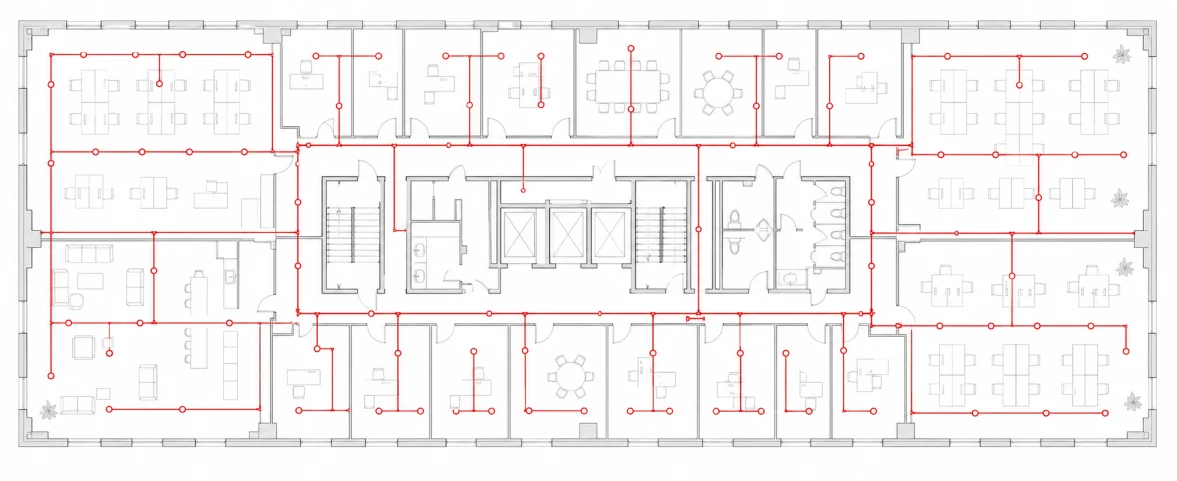
We review the property, current conditions, available plans and the project requirements.

Detection and release controls govern when water enters normally dry piping. We assess the site, define the operating sequence, then handle installation, testing, commissioning and follow-up.

Preaction adds detection, supervision and release controls before water enters the piping. That extra control is useful only when the risk and approved design justify the added complexity.
The piping normally stays dry. A detection event controls water admission, while the exact discharge sequence depends on the selected single- or double-interlock arrangement and sprinkler operation.
Often considered for data, records, control, equipment and other water-sensitive or critical areas where unintended water admission needs additional control.
Required interlock logic, detection coverage, supervisory air, valve trim, water supply, sprinkler layout, alarm interfaces, testing access and the approved sequence of operation.
We review the site, hazards, water supply and plans before defining the sprinkler-system scope and project sequence.
We review the property, current conditions, available plans and the project requirements.
We define the proposed system, layout, materials and installation scope for review.
We discuss the proposed scope, inclusions, commercial terms and any questions before approval.
Materials, equipment and site work are coordinated against the agreed project scope.
The completed installation is tested and commissioned according to the approved scope.
We remain available to maintain the project documents and BFP-related follow-up within our scope.
Preventive maintenance covers more than the sprinkler piping. We review the detection, supervision and release components included in the installed preaction arrangement and agreed scope.
Review the preaction valve, trim, supervisory air, piping and visible sprinkler conditions.
Check the agreed detection, alarm, interlock and release sequence functions.
Document impairments, leakage, supervisory issues and corrective work that may be needed.
Provide service records and BFP-related follow-up connected to our scope.
Straight answers about detection, release logic, suitable areas, system selection, maintenance and project information.
It is an automatic sprinkler system whose piping normally remains dry. A separate detection and release arrangement controls when water is admitted to the piping, while discharge follows the designed operating sequence.
Wet pipe systems keep water in the piping. Preaction systems add detection and release controls before water enters normally dry piping, which also means more components must be designed, tested and maintained.
The required events before water enters the piping differ. The appropriate sequence depends on the hazard, site operation and approved design, so it must be defined during planning rather than selected from a generic price list.
It may be considered for data, records, equipment and other water-sensitive or critical areas where additional control over water admission is justified. It is not automatically required for every sensitive room.
Yes. The scope can include the preaction valve and trim, supervisory air, detection interfaces, alarms, sprinkler piping and the operating-sequence tests appropriate to the installed system.
Send the contact person, company, site location, whether this is a new installation or an existing system, and any plans, sequence of operation, specifications, bill of quantities or BFP comments available.
Send the site location, whether this is a new installation or an existing system, and any available plans or specifications. We’ll review the details and contact you about the site assessment and next steps.
Service information and references from DGRB Fire Safety · Updated August 9, 2026 · References: BFP Revised IRR of RA 9514 and NFPA 13 — Installation of Sprinkler Systems.