





01
Site assessment
We review the property, current conditions, available plans and the project requirements.

Open sprinklers or nozzles discharge across a protected zone when the detection and release system opens the deluge valve. We assess the hazard, define the scope, then handle installation, testing and follow-up.

Deluge protection is built for selected hazards where rapid fire growth or exposure calls for water across an entire zone. It is not the default system for ordinary commercial areas.
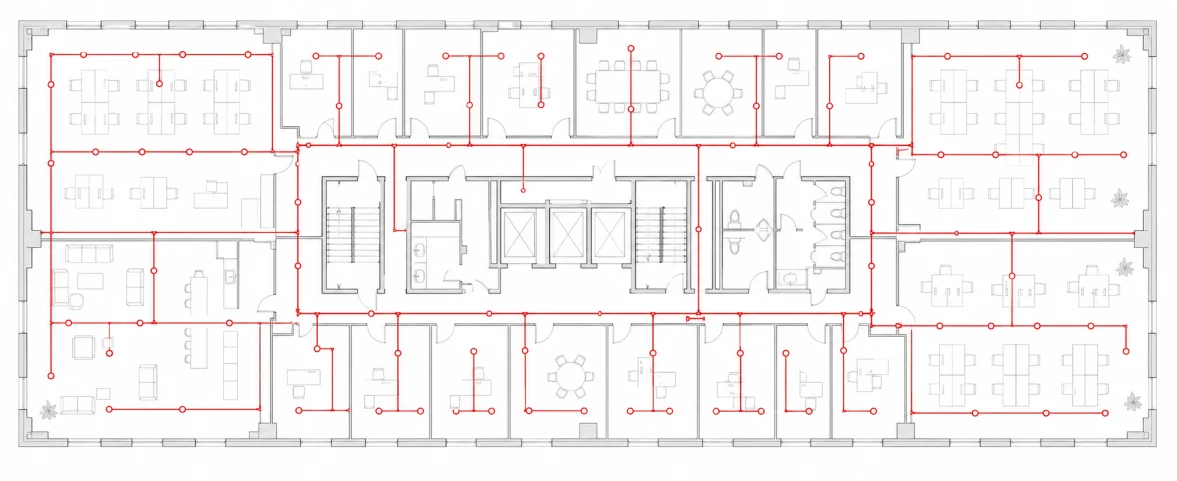
Open sprinklers or nozzles are connected behind a deluge valve. When the detection and release arrangement operates, the valve opens and water discharges across the protected zone.
Selected industrial, process or exposure hazards with rapid fire development, where simultaneous discharge over a defined area is required by the approved design.
Hazard and discharge area, hydraulic demand, water supply, valve and release logic, detection interfaces, drainage or containment, alarms, zoning and testing provisions.
We review the site, hazards, water supply and plans before defining the sprinkler-system scope and project sequence.
We review the property, current conditions, available plans and the project requirements.
We define the proposed system, layout, materials and installation scope for review.
We discuss the proposed scope, inclusions, commercial terms and any questions before approval.
Materials, equipment and site work are coordinated against the agreed project scope.
The completed installation is tested and commissioned according to the approved scope.
We remain available to maintain the project documents and BFP-related follow-up within our scope.
We provide preventive maintenance for existing deluge systems, covering the installed water, detection and release components included in the agreed service scope.
Review open sprinklers or nozzles, the deluge valve, trim, piping and visible conditions.
Check the agreed detection, alarm and release functions with site operations coordinated.
Document obstruction, corrosion, drainage, valve or control issues and corrective work that may be needed.
Provide service records and BFP-related follow-up connected to our scope.
Straight answers about zone-wide discharge, high-hazard applications, water demand, release controls, maintenance and project information.
It is a system with open sprinklers or nozzles connected to piping behind a deluge valve. When the detection and release arrangement operates, water enters the piping and discharges through the open outlets in the protected zone.
Yes, the open outlets connected to the activated deluge zone discharge when the valve opens. The protected area, discharge demand and zoning must therefore be established by the approved design.
It is used for selected high-hazard industrial, process or exposure risks where rapid fire development calls for simultaneous discharge over a defined area. It is not a routine choice for ordinary office areas.
A deluge zone can require substantial water flow because its outlets are open. The assessment must confirm hydraulic demand, available supply and how discharged water will be drained or contained.
Yes. We can define a coordinated scope for the deluge valve, open outlets, detection and release controls, alarms, water supply interfaces and service records without causing an unplanned discharge.
Send the contact person, company, site location, whether this is a new installation or an existing system, and any hazard data, plans, hydraulic information, specifications, bill of quantities or BFP comments available.
Send the site location, whether this is a new installation or an existing system, and any available plans or specifications. We’ll review the details and contact you about the site assessment and next steps.
Service information and references from DGRB Fire Safety · Updated August 9, 2026 · References: BFP Revised IRR of RA 9514 and NFPA 13 — Installation of Sprinkler Systems.